

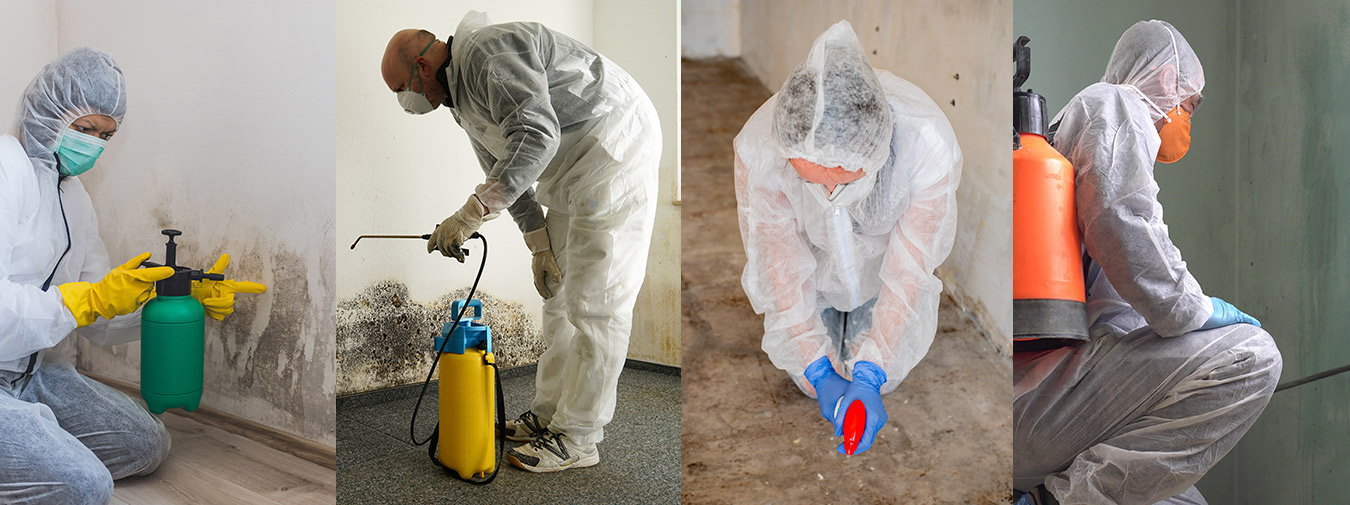
Mold in Your Air Conditioner: Why Florida Summers Turn Your AC Into a Mold Machine
You walk in from 92-degree heat, the AC kicks on, and something smells off. Not strong. Not obviously bad. Just musty. Like a beach towel that got left in a gym bag.
Most people crack a window, spray something, and move on.
Here in Northeast Florida, that smell deserves about ninety more seconds of your attention than most people give it. In a St. Augustine or Jacksonville summer, your air conditioner is one of the most reliable mold habitats in your entire building. Not because it’s broken. Because it’s working exactly as designed.
Here’s what’s actually happening inside that system, how to tell the difference between a nuisance and a real problem, and where the line sits between a job you can handle and one you shouldn’t touch.
Why Florida Summers Are Uniquely Hard on Your AC
Mold needs three things: moisture, organic material to feed on, and temperatures it likes. An air conditioner running through a Florida July supplies all three at once, continuously, for months.
Your evaporator coil is wet every single day
This is the core of it. Your AC doesn’t just cool the air. It dehumidifies it. Warm, humid air passes over a cold evaporator coil, and water condenses out of it, exactly the way it beads up on a glass of iced tea in August.
That water is supposed to drip into a pan and drain outside. But the coil itself stays damp for as long as the system is running. In July, with overnight lows sitting in the mid to upper 70s and dew points regularly above 74, that’s close to around the clock.
A permanently damp metal surface, in the dark, at 60 to 70 degrees, with a constant flow of air carrying dust and organic debris across it. If you sat down to design an ideal mold-growing device, you’d land somewhere close.
Dust is the food source
Mold doesn’t eat metal. But it happily eats what collects on metal: skin cells, pet dander, pollen, fabric fibers, cooking grease, drywall dust. Every one of those blows across your coil and gets trapped there by the moisture.
This is why a dirty filter is more than an efficiency issue. A filter that’s been in place since March isn’t catching debris anymore. It’s delivering it.
Oversized systems make it worse
This one surprises people. An air conditioner that’s too large for the space cools the room quickly, hits the thermostat setting, and shuts off. That pattern is called short cycling.
The problem is that dehumidification takes time. A system that runs in short bursts drops the temperature but never runs long enough to pull much moisture out of the air. You end up with a house that’s 74 degrees and still clammy. Cold and damp is worse for mold than warm and dry, and plenty of Florida homes are sitting right there all summer.
If your house feels cold but sticky, or your windows sweat, that’s a signal worth investigating.
The vacation problem
Leaving for two weeks and cutting the AC off, or setting it to 82 to save money, is one of the most common ways Florida homeowners come home to a mold problem.
With the system off, indoor humidity climbs toward outdoor levels. Nothing is drying anything. Two weeks of 80% relative humidity in a closed-up house is enough for visible growth to establish on walls, furniture, and inside the air handler itself.
Set it to 78 and leave the fan on “auto” rather than shutting the system down. The electricity you save is not worth the remediation bill.
Where Mold Actually Grows in an AC System
When people picture AC mold, they picture the vent cover. That’s usually the last place it shows up, not the first.
The evaporator coil. Ground zero, for all the reasons above. It sits inside the air handler and you generally can’t see it without removing a panel.
The drain pan and condensate line. Standing water is the giveaway. When a drain line clogs, and in Florida they clog constantly, often with mold and algae themselves, the pan overflows. Now you have water sitting in a closet, attic, or wall cavity. This is where AC problems turn into water damage problems.
The blower wheel and housing. Damp, dusty, and rarely inspected. Growth here gets distributed everywhere the system blows.
Insulated ductwork. Flex duct with fiberglass insulation is common in Florida homes. If it’s damaged, poorly sealed, or running through a hot attic where condensation forms on the outside, it becomes a problem you can’t see from any room in the house.
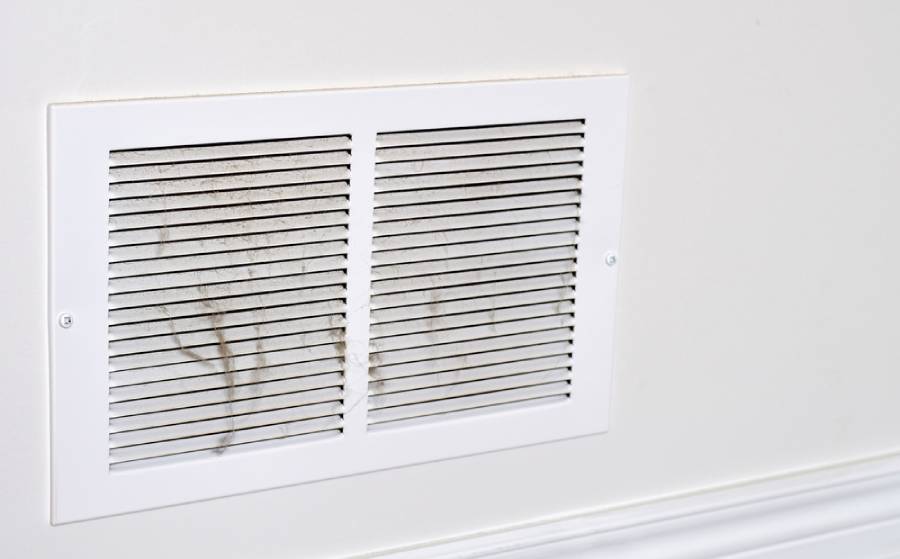
Supply and return vents. The visible symptom. Dark speckling around a register usually means something upstream is producing spores and depositing them here.
Window and portable units. Same physics, smaller package, and typically no drain line at all, just a pan that’s meant to evaporate. These are frequently the worst offenders in rental units and older buildings.
How Do You Know If Your Air Conditioner Has Mold?
There’s rarely one dramatic sign. It’s usually a pattern.
The smell changes with the system. This is the most useful clue you have. If the musty odor appears within a minute of the AC starting and fades after it shuts off, the source is almost certainly inside the system. If the smell is constant whether or not the AC is running, look elsewhere: under a sink, behind a washer, inside a wall.
Dark speckling on or around vents. Black, gray, green, or occasionally pink or orange. Color doesn’t reliably tell you the species, and no one can identify mold type from a photo, but discoloration around a register is worth taking seriously.
Symptoms that track with location. Congestion, headaches, itchy eyes, or a cough that’s noticeably worse at home and better when you’re out for the day. Or worse in one particular room. If you’re chasing this, our post on mold allergy symptoms and treatment goes deeper.
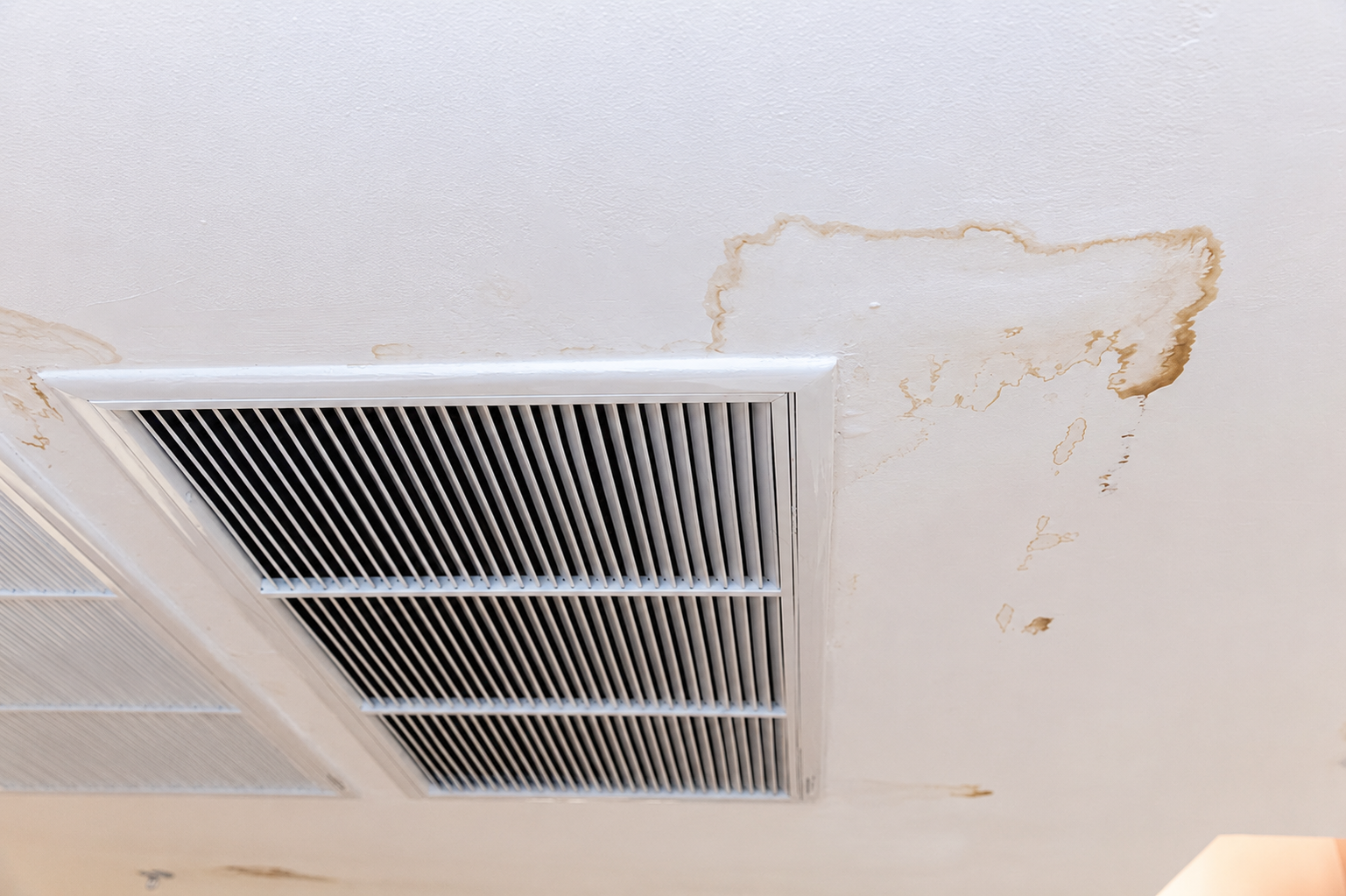
Visible moisture where it shouldn’t be. Water stains on the ceiling below an attic air handler, dampness around the unit, or a drain line that isn’t dripping outside on a humid day when it should be.
Weak airflow. A coil that’s fouled with biological growth restricts air. If one room never cools properly and your energy bill is climbing, that’s a possible cause.
One honest caution: not every musty smell is mold, and not every dark spot is either. Dust, soot, and mildew on a surface all get mistaken for mold constantly. We wrote a whole piece on telling mold and dust apart because it’s the single most common question we get.
Is Mold in Your Air Conditioner Dangerous?
The honest answer is that it depends on what’s growing, how much of it there is, and who’s breathing it. Only one of those three can be judged without testing, and it’s the third.
What we can say plainly is that an HVAC system is an unusually efficient distribution mechanism. Mold behind a bathroom vanity mostly stays behind the bathroom vanity. Mold on an evaporator coil gets aerosolized and delivered to every room in the building, several times an hour, all summer.
The CDC associates mold exposure with allergic reactions, asthma symptoms, and upper respiratory irritation, and some people react far more strongly than others. Children, older adults, and anyone with asthma, allergies, or a compromised immune system tend to feel it first.
That’s the practical case for taking a musty AC seriously. Not panic, just the recognition that the delivery system is working against you.
Wondering what’s actually in your air? Air sampling and lab analysis answer the question that visual inspection can’t. Learn about indoor air quality testing
What You Can Safely Clean, and What You Shouldn’t Touch
We’d rather tell you the truth here than sell you something you don’t need.
Reasonable to handle yourself
- Replace the filter. Every 30 to 60 days in a Florida summer. Not every six months.
- Wipe down visible vent covers. Remove the register, wash it in soapy water, dry it fully, put it back.
- Clear the condensate line. Pouring a cup of distilled vinegar into the access port every month or two is standard Florida maintenance and prevents a lot of misery.
- Run a dehumidifier. Target 45% to 55% relative humidity indoors. A $15 hygrometer will tell you where you actually stand.
- Keep the drain pan clear and the area around the air handler dry.
Where to stop
Once you’re past the vent grille, stop.
Not because it’s difficult, but because of a specific risk: disturbing mold growth aerosolizes it. Scrubbing a colonized coil or blower wheel without containment takes a problem that was partly contained inside a metal box and distributes it through the whole building. We are routinely called to homes where the situation got measurably worse after a well-intentioned cleaning attempt.
Also skip the bleach. It’s the reflexive choice and it’s the wrong one on porous or semi-porous material. Household bleach is mostly water, and the water penetrates further than the disinfecting agent does. On insulation, drywall, or duct liner it can leave things damper than it found them.
And be skeptical of duct cleaning as a standalone fix. If a duct cleaning company hasn’t identified why moisture is present, you’re paying to remove the symptom while the cause keeps producing.
Why a Musty Smell Doesn’t Always Mean the AC
Worth ruling out before you spend money on the wrong thing:
- A slow plumbing leak under a sink or behind a wall
- Roof or flashing leaks showing up after our daily afternoon storms
- Poorly ventilated bathrooms where the exhaust fan vents into the attic instead of outside
- Crawlspace or slab moisture wicking upward
- Sun-facing walls in an over-cooled house, where hot humid outdoor air hits cold interior drywall and condenses inside the wall assembly. This is a common and badly under-diagnosed Florida issue.
This is exactly why we lead with a mold inspection rather than remediation. Finding the moisture source is the job. Everything else is cleanup. Our post on signs of hidden mold before it’s visible covers more of these.
For Rental Property Owners and Commercial Buildings
If you own rental property in Northeast Florida, AC mold carries a risk profile that goes beyond the repair cost.
Tenants are increasingly aware of their rights, and a documented complaint about air quality that goes unaddressed can escalate quickly. The practical protection is documentation: a dated, third-party assessment from a licensed assessor establishing the condition of the property. That’s worth having whether the result is good news or bad. Our overview of mold and renters’ legal protections in Florida is useful context.
For commercial spaces such as offices, retail, restaurants, and medical suites, the exposure is different but real. Larger rooftop and packaged units, longer duct runs, and unoccupied nights and weekends when systems idle and humidity climbs. Add employee complaints and the potential for a temporary closure, and the math on a preventive assessment gets easy. There’s more on that in commercial mold risks in Florida offices and retail spaces.
How to Keep Mold Out of Your AC
A short list that covers most of it:
- Change filters every 30 to 60 days. Non-negotiable in summer.
- Hold indoor humidity between 45% and 55%. Measure it. Don’t guess.
- Flush the condensate line monthly with distilled vinegar.
- Don’t shut the system off when you travel. 78 degrees, fan on auto.
- Use bathroom and kitchen exhaust fans, and confirm they actually vent outside.
- Have the system professionally serviced twice a year, and ask specifically about the coil, drain pan, and blower.
- Fix leaks in days, not weeks. Mold can establish in wet material within 24 to 48 hours in a Florida summer.
- Consider variable-speed equipment if you’re replacing your system. Longer, gentler run cycles dehumidify far better than short blasts.
Our guide to preventing mold during Florida’s rainy season covers the whole-house side of this.
When to Call a Licensed Mold Assessor
Pick up the phone if any of these apply:
- The musty smell keeps coming back after you’ve cleaned the vents and changed the filter
- You can see growth around multiple registers or on the air handler itself
- Someone in the building has symptoms that improve when they leave
- Your drain pan has overflowed, or water has gotten into a wall, ceiling, or attic
- You’re buying or selling and want the air quality documented
- You own rental property and have received a tenant complaint
An important distinction most people don’t know: in Florida, mold assessment and mold remediation are separately licensed activities. The assessor identifies and documents the problem and writes the protocol. The remediator executes it. That separation exists to prevent the obvious conflict of interest where the person diagnosing you is also the person selling you the cure.
TCB EnviroCorp holds both licenses, Mold Assessor MRSA55 and Mold Remediator MRSR789, along with a General Contractor license (CGC1519836), which means we can also handle the reconstruction if a wall has to come out. But when we assess, we assess honestly. Sometimes the answer is that you don’t have a mold problem, and we’ll tell you that.
Our senior environmental scientist, Mark S. Mongon, has more than 35 years in environmental industrial hygiene and has worked projects including the World Trade Center, the Statue of Liberty, and Boston’s Central Artery Tunnel. That experience gets applied to a house in St. Augustine the same way it gets applied to a landmark.
The Bottom Line
Your air conditioner is running harder right now than at any other point in the year, and it’s doing so under conditions that favor mold growth. That’s not alarmism. It’s what a Florida July does to a machine whose job is producing cold, wet metal in humid air.
If something smells musty when the system kicks on, the smart move isn’t panic and it isn’t ignoring it. It’s finding out.
Frequently Asked Questions
Can mold in an air conditioner make you sick?
Mold exposure is associated with allergic reactions, asthma symptoms, congestion, headaches, and respiratory irritation, and some people react much more strongly than others. What makes AC mold particularly worth addressing is distribution. The system actively circulates spores through every room rather than leaving them in one spot. If symptoms consistently improve when you leave the building and return when you come back, that’s a meaningful pattern worth investigating.
How can I tell if my air conditioner has mold?
The most reliable indicator is timing. If a musty odor appears shortly after the AC starts and fades when it shuts off, the source is likely inside the system. Other signs include dark speckling around vents, weak airflow, standing water in or around the drain pan, and household symptoms that improve when you’re away. Visual inspection alone can’t confirm it. Air sampling and lab analysis can.
Is it safe to clean mold out of my AC myself?
Vent covers and filters, yes. Anything past the grille, no. Cleaning a colonized coil, blower wheel, or duct interior without containment aerosolizes spores and typically spreads the problem through the building rather than solving it. It’s one of the more common ways a contained issue becomes a whole-house one.
Will bleach kill mold in an air conditioner?
Not reliably, and it can make things worse. Household bleach is mostly water, and on porous or semi-porous surfaces like duct liner, insulation, or drywall, the water penetrates deeper than the active ingredient does. That leaves the material damp and can feed regrowth. Professional remediation uses containment, HEPA filtration, and antimicrobials matched to the material.
Why does my house smell musty even though the AC is new?
New equipment doesn’t rule it out. Oversized units short cycle, cooling quickly without running long enough to dehumidify, which leaves a house that’s cold and damp. Installation issues like poorly sealed ductwork or an improperly sloped drain line also cause problems on brand-new systems. And the source may not be the AC at all. Plumbing leaks, roof leaks, and bathroom fans venting into the attic all produce the same smell.
How much of a problem is this in Florida specifically?
More than in most of the country. Northeast Florida combines high year-round humidity, overnight lows that stay in the mid to upper 70s through the summer, daily convective storms, and air conditioning that runs nearly continuously for five or six months. The same equipment behaves very differently in Arizona or Ohio.
Do I need mold testing, or can I just have the ducts cleaned?
Duct cleaning removes accumulated debris. It doesn’t identify why moisture is present, and if the moisture source remains, growth returns. An assessment locates the source, documents the extent, and produces a written protocol, which is also what you want in hand if the property is a rental, a sale, or an insurance claim.
Should I turn my AC off when I go on vacation?
No. Set it to around 78 degrees with the fan on auto. Shutting the system off in a Florida summer lets indoor humidity climb toward outdoor levels, and two weeks of that in a closed house is enough for mold to establish on walls, furniture, and inside the air handler.
Not Sure What That Smell Is? Let’s Find Out.
A musty AC might be a dirty filter. It might be a colonized coil quietly distributing spores through your entire house. You can’t tell from the vent, and neither can we without testing.
TCB EnviroCorp has been assessing indoor air quality across St. Augustine, Jacksonville, Ponte Vedra, Palm Coast, and Northeast Florida for over 30 years. We’re licensed as both a mold assessor and a remediator, every inspection is handled directly by the owner, and if you don’t have a problem, we’ll tell you that.
We can be at your property within 48 hours.